Welcome!

Welcome! This blog contains information relating to Saltwater aquariums. This includes setup, maintanence, inhabitants, and general knowledge. Use the search engine if you are interested in particular topics!

It all starts with my own 90g Saltwater Aquarium.

Search This Blog

Monday, February 21, 2011

(DIY) Do-It-Yourself Filtration / Refugium

     An alternative to purchasing a filter is to create your own. A sump/refugium DIY filtration unit has many benefits. It consumes less energy while in operation, provides a place to hide heaters and protein skimmers (this can greatly improve the appearance of your display tank), increases the water volume in order to dilute undesireable materials in between water changes, helps eliminate nuisance algaes while allowing important macro algaes space and nutrients to grow (pink and purple coraline algae, chaeto, etc.), and creates a space for healthy organisms such as copepods (the primary diet of gorgeous fish such as the Mardarin Dragonet) to thrive.
     A DIY sump/refugium consumes less energy because it uses an overflow box that relies on gravity to drain the water into the sump area. Instead of a filter unit that uses energy to suck water out and then pump the water back up into the tank, the sump/refugium unit only needs a pump to return the water. The most important thing to remember when building your own filtration is that you want to amount of water returned to the tank to match the amount being drained (keep in mind that the flow coming out of the pump diminishes depending on the height of the tank).
     The sump/refugium is generally divided into three spaces by walls or baffles. The first area is where the water drains down from your display tank. Often times this is the ideal space to store the protein skimmer. The second area is often where the refugium is setup (so long as there isn't heavy flow through the area). This is an excellent place to hide your heater while maintaining a steady temperature throughout your water. The third space is where your return pump goes.
     Aside from properly setting up your flow rates, the refugium is the most important part of the setup. A refugium consists of a sandbed, live rock, and macroalgaes. These three things are the major filters for the tank water. Sand and liverock help absorb substances in the water while the macroalgaes use nirates to grow. Macroalgaes are also a breeding ground for pods that benefit the tank and its inhabitants. It is especially important to have a light with a splash guard over the refugium area. Chaeto is a very popular algae to use.

    To create my own sump/refugium, I recycled an old 20 gallon tank and some spare pieces of glass. I've seen others use tubs and egg crate to accomplish the same task. Use what you have available to you and you can save money and energy.
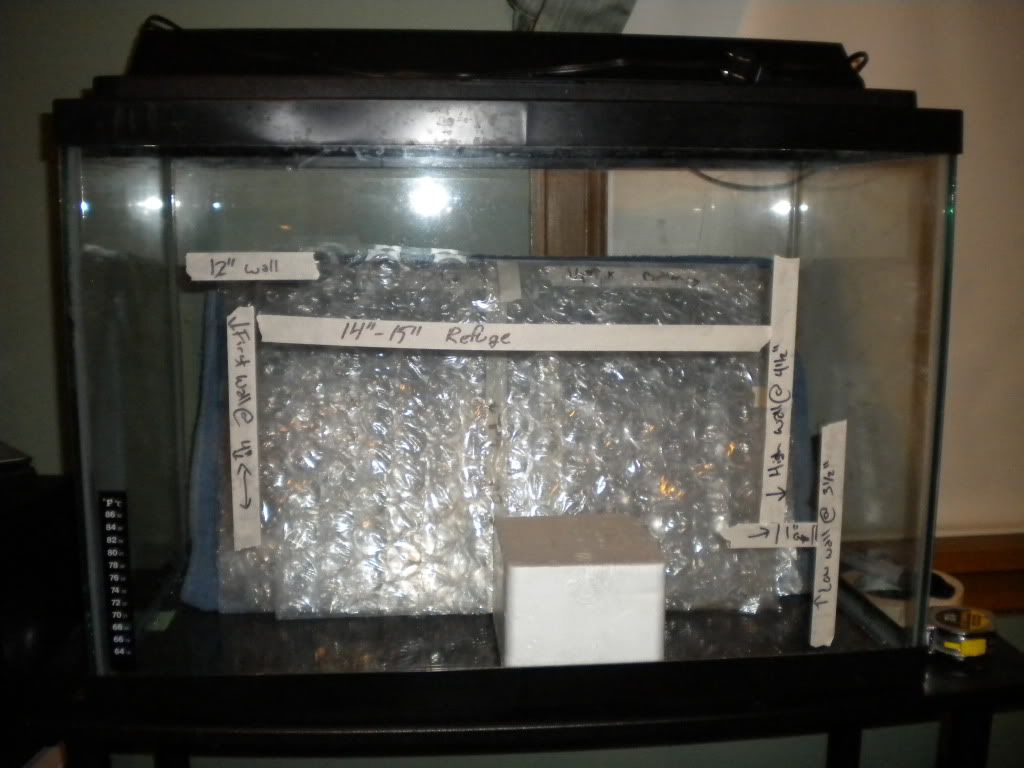
     The first step is to measure out the different compartments you need for your sump/refugium. Make sure you leave room for the protein skimmer you intend to use, the return pump, and the refugium (this includes the length of light you are using and the heater if you are going to hide it in this location).
     Pictured Above: These were my initial measurements for my first sump/refugium. Tape worked well to mark where each baffle needed to be placed. I also included a temperature gauge on my sump to ensure stability in several locations. The space for my refugium is much larger than necessary. However, it doubles as a space to store low-light coral frags while I am waiting for them to adhere to their new rock.
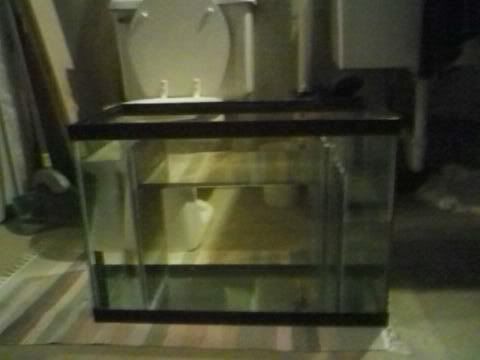
    When fixing your walls/baffles to the sides of the tank, it is important to use non-toxic adhesive. Don't forget to double check your measurements before permanently placing them in the sump/refugium. I used blocks of wood to hold the walls in place while the glue dried. I allowed it to dry for over 24 hours. Check the instructions on the adhesive you use to be sure you wait the appropriate time.
     Another important step is to check for any leaks before installing it. Make sure the water flows correctly into each compartment. Be sure that it can handle the water pressure and current that will be passing through it.
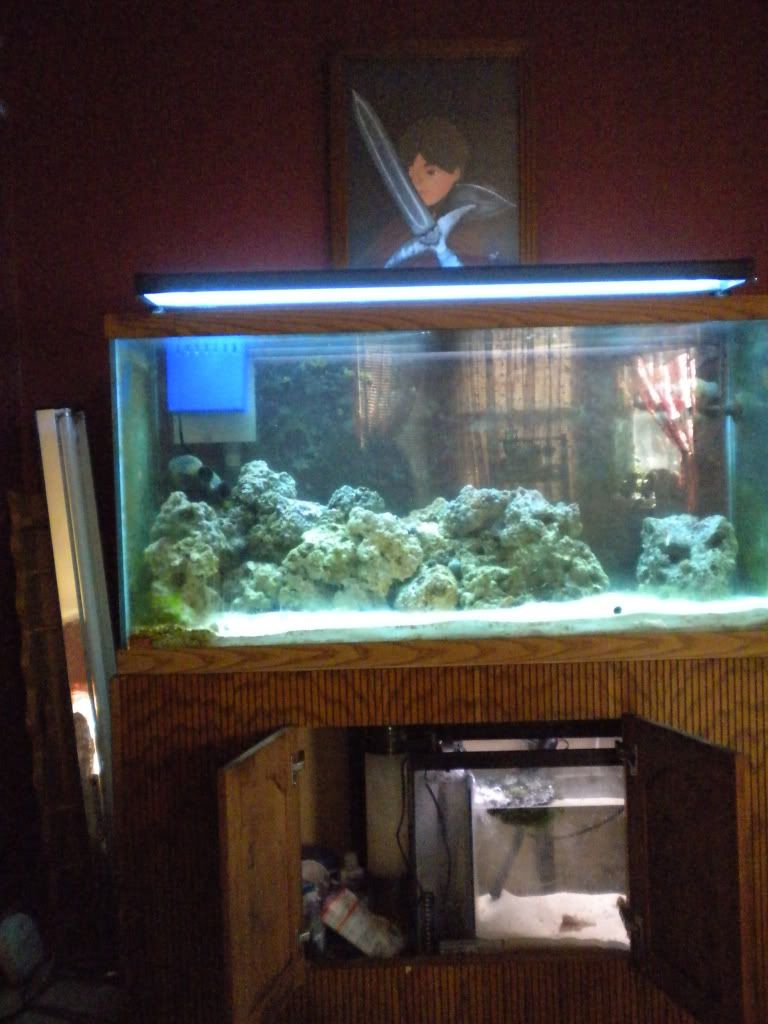


     To install, simply place your overflow box in the tank. (Overflow boxes are ideal as drilling a hole for drainage can be both costly and risky to your display tank). Make sure the overflow box is secure. DO NOT START THE SYPHON YET. Place the sump/refugium inside your display stand and bring the drainage tube into the first compartment. Insert your return pump into the appropriate compartment. Bring the return tubing up and secure the return spout on your display tank.
     Place your protein skimmer, light, and heater into the proper compartments. Pour your sand into your refugium area. Slowly add water to the sump/refugium without over filling. There should be enough room left in your sump/refugium that if the power goes out, you display tank has room to drain about 1-2 inches into it without causing it to overflow. (If overfilled, you risk a HUGE mess). Place your live rock and macro algae into the refugium area.
     When you have everything in place and plugged in, start the syphon on your overflow box. Depending on the type of overflow box you purchase or create, the syphon process may vary. In most cases, you will have a small flexible tube to slip part way into a larger tube or solid opening. Suck air through the small flexible tube until the syphon begins and then remove it.
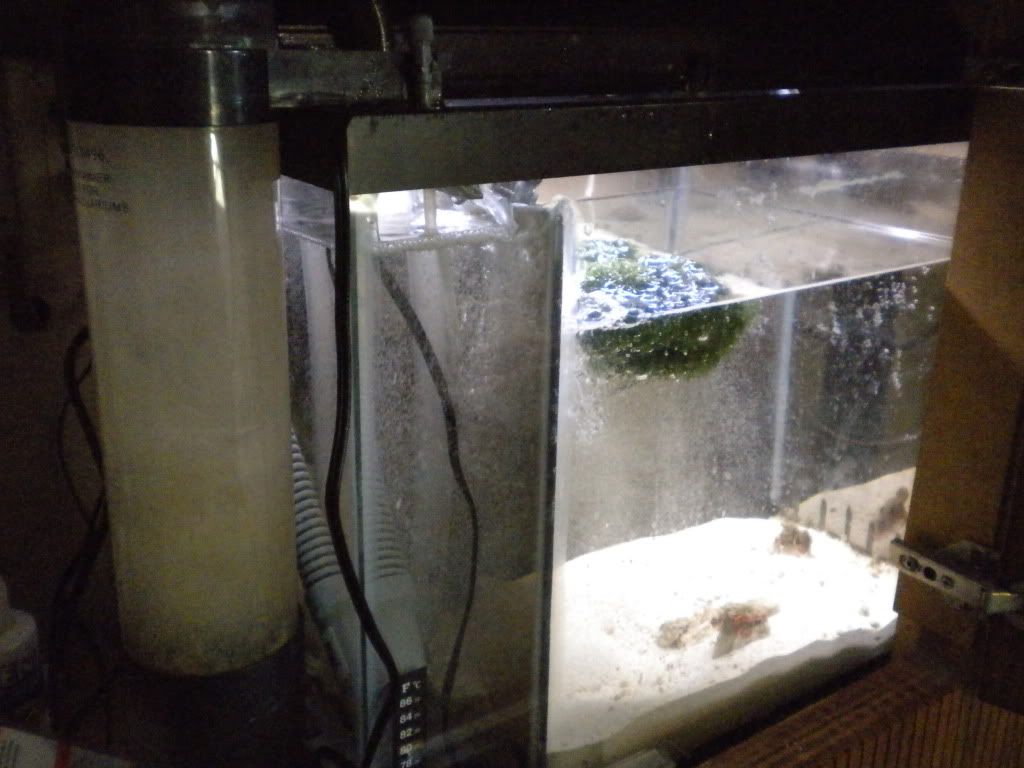

     Watch carefully as the water drains into your sump/refugium. The water should fully cover the return pump. Ensure that the water is flowing properly from the tank, through the sump/refugium, and back into the display tank. Check it frequently until you are certain the water flow is exact.

Pictured Above: Hangon Protein skimmer, sump/refugium, sand, and a floating clump of Chaeto macroalgae.


Pictured Below: Halymenia Sp. Macroalgae. Beautiful, fragile, and loved by herbivore fish.


    I keep records of my water chemistry tests. After installing my sump/refugium I noticed more stability in my water samples, lower nirate and nirite levels, virtually no ammonia, and a general decrease in stressed fish and corals.

   
I recommend keeping a record of your own water tests to ensure the health of your aquarium.

    Keep in mind: A sump/refugium is just a different type of filter. It DOES NOT replace necessary water changes!

Saturday, November 20, 2010

Beginner's Guide to Setup & Maintenance

     Beginner's Guide


     Setting up any aquarium takes time and effort if you are to have success. Many believe Saltwater aquariums to be more difficult, however the truth of the matter really depends on how much you are willing to actively pursue this interest. There is more to setting up an aquarium than stopping at your LFS (local fish store) and purchasing an empty tank, a light, and a handful of goldfish.
     Much of the success and enjoyment that comes with the Saltwater hobby is about planning ahead. Think about what type of fish you intend to get, how big they will eventually grow, and whether you want to create a realistic habitat or one made of plastic decorations. Many times, people go in to purchase a fish without an idea just how large some of them can grow. An Oscar (A freshwater cichlid from South America) is often sold as an adorable 2 inch fish. Unbeknownst to many consumers, this little guy grows about an inch a month -slowing its growth rate around 7 inches- and eventually will be about a foot long. Doing proper research will not only help you plan for an aquarium you will enjoy, but will also help prevent fish loss -thus saving you money and frustration in the long run.
    
     Important Things to Remember When Setting up an Aquarium:
  •    Make sure the filtration you choose is sufficient for the size of tank you purchase. An oversized filtration unit is better than one that is too small. Protein skimmers are also recommended for Saltwater tanks, especially those wishing to create a reef tank.
  •    Test Kits are important. Knowing what is in your water supply can help you determine what is wrong with your setup should any of your fish or other inhabitants fall ill or die. The more expert level creatures you decide to keep, the more important test kits become.
  •    A Salinity Gauge. This is a must for Saltwater tanks. It allows you to test the salinity (Specific Gravity) of the water. Each inhabitant of the tank has its own tolerancy levels when it comes to salt. For most commonly kept species the desired level is 1.022-1.025 (Higher or Lower levels can result in fish/invert illness or death; corals are extremely sensitive to such changes in water conditions).
  •     Temperature Gauge. As with salinity, certain species have different tolerancy ranges when it comes to hot or cold.
  •     Substrate. This can be gravel, crushed coral, or sand. This is often a personal preference issue. I prefer sand because it is easier to clean and allows a greater variety of inverts to live comfortably within it.
  •     Lighting. This depends entirely on what type of tank you are creating. If it's going to be a fish only tank, you can get by with the cheapest available. However, if you intend on creating a coral reef, you may need anything from power compacts, T5HOs, or even metal hallides.
  •      Powerheads. These are mainly required for Reef tanks to direct water flow for corals. Fish also love to swim in the currents they create. There are many varieties with various flow rates; be sure to research and choose which is right for the size of tank and type of corals you own.
  •     Solutions that remove chlorine/ammonia (I use Prime) from your water are necessary, but it is still important to let the tank cycle the water without fish for a recommended month. This allows beneficial bacteria time to grow in the substrate and in the filtration unit. Without this helpful bacteria, your fish will have a difficult time surviving.
     General Saltwater Tank Parameters:

  • Salinity: 1.022-1.05
  • Temperature: 78-82 ͦF
  • pH: 8.1 is the natural pH of ocean water
  • Alkalinity: 3-4 meq/L
  • Nirates: 0-10ppm
  • Nirites: Anything above 0ppm is potentially toxic
  • Calcium: near 450ppm
  • Phosphate: levels should be kept low to avoid nuisance algae
  • Ammonia: 0ppm, higher levels are toxic
    Initial Setup:
    
     After you have setup your tank -with filtration, lighting, sand, rockwork (if you so choose to have a reef tank), and allowed it to cycle fishless for one recommended month- run a test to check the water's parameters. If salinity, temperature, pH, nirates, nirites, and ammonia are at the appropriate levels, then you are ready to add your first fish.
     Don't go for the flashy, expensive fish first. In order to ensure that your tank is setup properly and safely for future purchases, buy a cheap fish to test the waters (blue-green chromis often work best for this as they are inexpensive and hardy).
          Acclimating New Fish:
               Fish need to slowly get used to the parameters of there new habitat. Not all water has identical parameters and this must be taken into account when adding them to your aquarium. Ensuring their survivial should be your number one goal and this requires patience.
  • Method 1: Float your fish inside its bag in your aquarium. This will allow the temperature inside and out to become the same. As you are floating your fish, open the bag and clip the edges to the size of the tank so that the fish can't swim out and so that tank water isn't allow to drift in. Every so often you will need to take a cup and add a small amount of tank water into the fish bag until the water inside the bag is at least double the amount. Transferring tank water into the bag allows the parameters to slowly become close to the same as in the tank you are about to introduce the fish to. This process should take 45 minutes to an hour. More sensitive fish require a longer acclimation period.
  • Method 2 - Drip Acclimation: This method is preferred for very sensitive fish, inverts, and especially anemones (Expert level). This method also has the greatest rate of success. Carefully pour the fish and its water into a plastic tubberware. Using a length of latex tubing, tie a loose knot at near one end. Clip that end to the tank with its tip well below the water level. Start a siphon with the tubing. Clip the opposite end to the container holding the fish. You want the knot in the tubing to be tight enough that the water flow is a consistant --drip--drip--drip--. As the water level rises in the tuberware, you can slowly loosen the knot so that the flow slightly increases. Continue this method until the water in the tuberware is at least doubled. This is often a slower process than the first method, but causes the fish less stress.
          After acclimating your new fish, carefully release it into your tank. If the fish shows signs of stress (rapid breathing, odd behavior, etc) you can turn off the lights as it eases the level of stress in a new environment. Keep a close eye on your new fish for a week or two before adding any new inhabitants. Make sure feeding responses and activity is normal.
          When you do add future inhabitants, keep in mind: It's best to add fewer fish at a once and spread out new introduction over time to ease stress. Stress can lead to ich and other unwanted illnesses.

     Maintenance- Cycling the Tank:

     Remembering to regularly cycle your tank is important to ensure the survival of your fish. Saltwater fish can be expensive and you don't want a lazy streak to send your favorite fish friend down the drain.
     With most tanks, it is necessary to Cycle the tank once a week to keep the enclosed environment at optimal health. Testing the water weekly will also aid in your success.
  • Method: Unplug your heater, filtration, and any other in tank devices that may require full water levels to function. Using a tube (any clean tube can work, but they also sell many varieties at the LFS), siphon out 20% of your tanks water. Using fresh water, add the appropriate amount of chlorine/ammonia remover and salt (I use Instant Ocean as it contains calcium, magnesium, and other trace minerals that are necessary to a reef system). Your salinity gauge will come in handy here. Make sure the water, salt, and added chemicals are stirred before slowly adding them into your tank. Once your tank is at its original full capacity, you are finished! Remember to plug in anything you unplugged at the start. *Note* This cycling method is also a good way to help balance out any water parameters that get out of whack over time - high nirates, nirites, and ammonia can be removed from your system this way. If you notice things are severely amiss, try doing 5-10% water changes using this method daily until resolved.
     Another important thing to remember about maintenance is to check your filtration. Generally, the inside filter is composed of filter floss and activated carbon. These fill up with gunk over time and need to be replaced. Every two weeks to a month is recommended depending on your bio-load (the amount of waste produced by the number of fish you have). When putting a new filter into your filtration unit, make sure to rinse in first in clean water.